

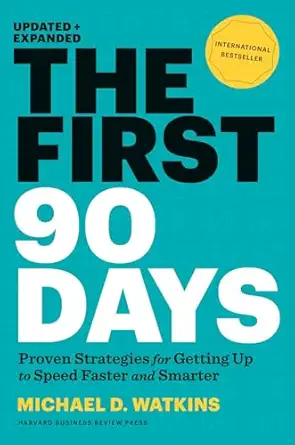
Michael Watkins’ The First 90 Days. As the title says, the core idea is simple — the first 90 days in a new role determine everything that follows.
#A Year Ago — When My Job Change Was Confirmed
I’d bought the book a while back, but didn’t properly read it until a year ago, right after my job change was confirmed. I devoured it on the flight to New York for a post-resignation trip. When you join a new company, the pressure to prove “why they hired me” makes you want to deliver results fast, but the book says to spend the first 30 days focused on learning.
Was my success at my previous company purely my own doing? My effort and ability played a part, but what propped it up from behind was far greater. The trust built with colleagues over years, a deep understanding of how the organization works, implicitly shared context — all of that had been there. At a new company, all of it resets to zero. I’m the same person, but everything around me is different. That’s exactly why the book says to spend the first 30 days learning.
When you join a new company, you want to ship something tangible right away. But what matters more is understanding the decision-making structure, team dynamics, and hidden context. You can catch up on the tech by reading docs, but context only comes from talking to people. During my first month, I scheduled as many 1:1s as I could, spending time understanding people and processes before code. It felt like a detour, but that’s exactly what created speed later on.
There’s also the temptation to earn recognition quickly right after joining. But pushing for big changes when you don’t yet understand the organization only breeds resistance. That’s what the book means by starting with a small “Early Win.” I followed along with CS tasks that existing team members handled fluently through tribal knowledge, and documented them. Nothing grand, but it helped me learn, and the documentation itself became a visible output. Making small changes gives you the feeling that you’re adapting, and trust builds around you. That becomes the foundation for attempting bigger changes later.
#Recently — Recommending It to a Colleague Who Became a Leader
I picked the book up again recently to recommend it to a colleague who’d just stepped into a leadership role. Different passages caught my eye this time.
There’s a trap that’s easy to fall into when you first take on leadership: “doing more of what I’m already good at.” You became a leader because you were a great developer, so you do more thorough code reviews and get more deeply involved in architecture decisions. It’s similar to wanting to show quick results when changing jobs. The book says the same thing here:
The first thing a newly promoted leader must do is stop the behaviors that made them successful in their previous role.
A leader’s job isn’t doing what they’re good at — it’s creating an environment where the team can do well. Without making this shift, you easily become a micromanager. You’re working hard, but the team can’t move. The feedback I received when I first became a leader was identical — your individual skills are no longer what matters. What matters is helping others succeed.
The STARS model also stood out to me this time around. It’s a framework for diagnosing the state of your organization first.
| State | Description | Leader’s Role |
|---|---|---|
| Start-up | Building from scratch | Fast execution, team assembly |
| Turnaround | Reversing a crisis | Diagnose problems, change direction |
| Accelerated growth | Scaling up | Add structure, establish processes |
| Realignment | Correcting course | Build awareness, drive change |
| Sustaining success | Maintaining what works | Sustain innovation, prevent complacency |
Even with the same “leader” title, leading an early-stage startup team and maintaining a stable team require completely different strategies. Apply a stability playbook to a team in crisis and you’ll fail; the reverse is just as true. Diagnose first, then adapt.
#A Book I’ll Reach for Every Time My Role Changes
When I changed jobs, I underlined “listen first, learn first.” When I read it from a leadership perspective, I underlined “let go of the success patterns from your previous role.” Next time I open this book, I’ll be underlining something else entirely.